
WHAT THE BOX
IS TELLING YOU.
The litter tray is the most honest health dashboard in your house. You don’t need to diagnose anything — you just need to notice changes.
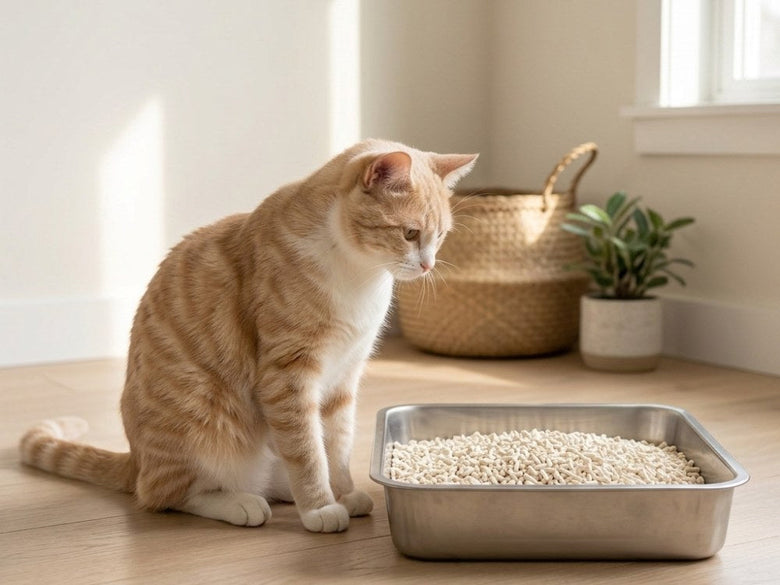
Cats are extremely good at hiding discomfort and extremely bad at hiding it in the litter box. A glance while you scoop is genuinely useful information — and a plant-based litter makes it easier to read, because the clumps hold their shape and size.
FREQUENCY
Learn what normal looks like for your cat so a change is obvious. Suddenly more visits, or noticeably fewer, is the kind of thing worth writing down with a date.
STRAINING OR CRYING · SAME-DAY VET
A cat who visits repeatedly, strains, or vocalises in the tray needs a vet the same day — particularly a male cat. This is the one item on this page that is urgent rather than something to monitor.
GOING OUTSIDE THE BOX
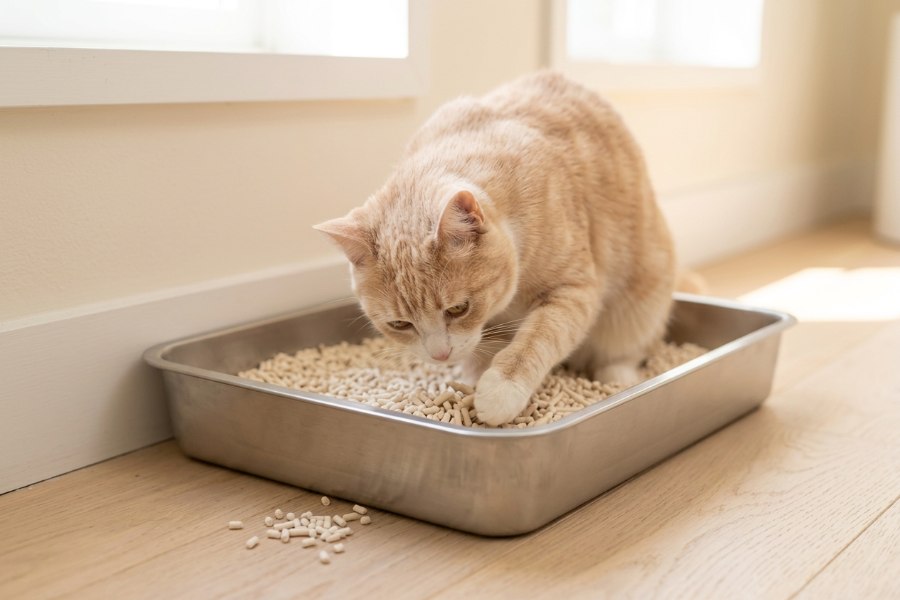
Rarely spite. Work through the boring explanations first: the tray needs emptying, the location is wrong, there are too few boxes, they dislike the texture, or they are associating the tray with pain. Fix the boring ones and most cases resolve.
CLUMP SIZE
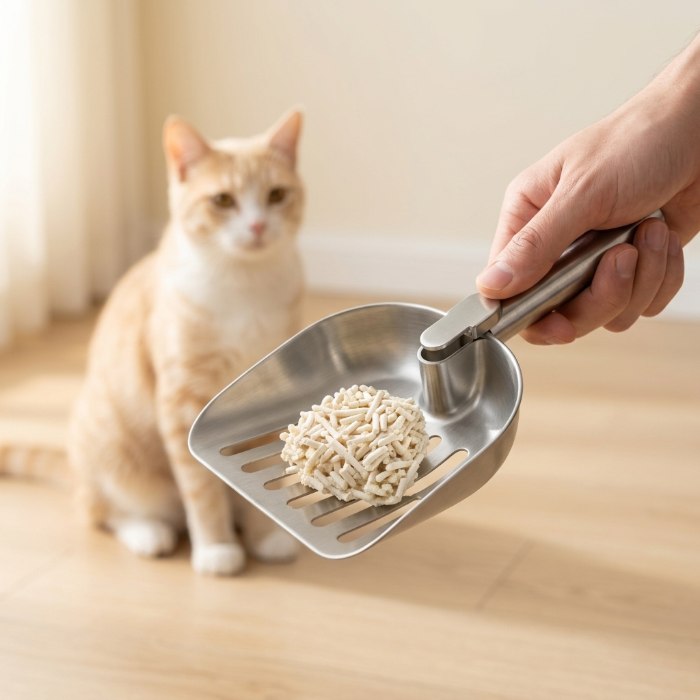
Because Kind Litter clumps by absorbing, the clump is a rough proxy for volume. A run of unusually large or unusually small clumps is worth mentioning, even when everything else seems fine.
YOU DON’T NEED TO DIAGNOSE ANYTHING. YOU JUST NEED TO NOTICE.
Dates and details beat guesswork when you get to the appointment.
WHAT TO TELL THE VET
When it started, how often, and what changed in the house — new litter, new food, a move, a visitor, a new pet. That short list saves a lot of appointment time.
ONE IMPORTANT NOTE
This is a noticing guide, not veterinary advice.
- Nothing here is a diagnosis. If something looks wrong, call your vet.
- Straining, crying or repeated unproductive visits: same-day vet, especially in male cats.
- Keep a note on your phone with dates — patterns are easier to see written down.
- Change one thing at a time so you can tell what helped.
