
CAN YOU ACTUALLY
FLUSH IT?
Short answer: yes, one clump at a time. Here is why that works with tofu and never with clay — plus the two cases where you should bin it instead.
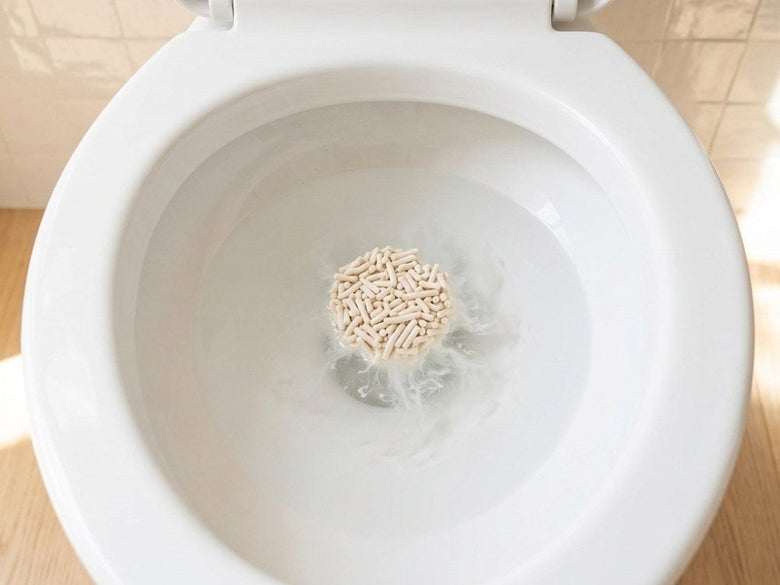
The word “flushable” gets used loosely, so it is worth being precise about what actually happens in the bowl — and where the limits are.
WHY CLAY CAN NEVER GO DOWN
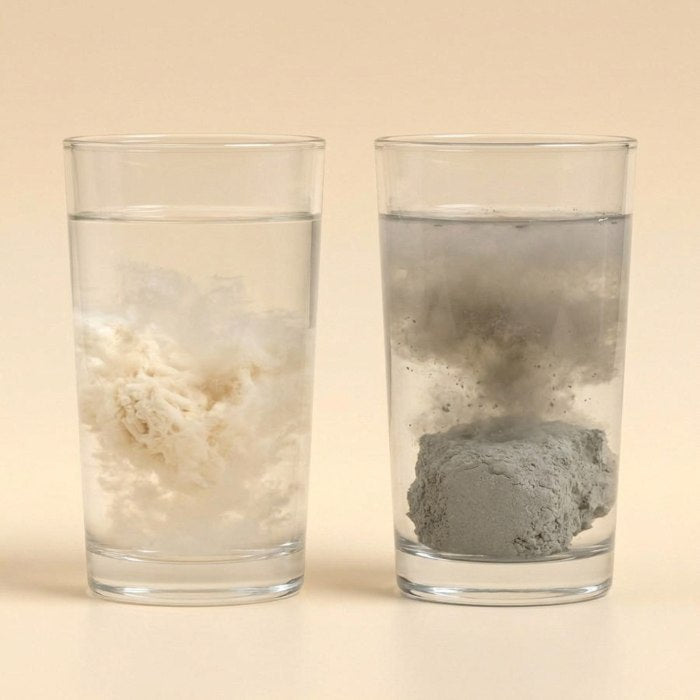
Sodium bentonite clumps by swelling and setting hard. That is exactly the property you do not want inside a waste pipe — closer to pouring a small amount of concrete down the drain than to flushing waste.
WHY TOFU CAN
Kind Litter clumps by absorbing, with plant fiber held together by guar gum. In moving water that bond simply lets go and the clump breaks back into fiber, which is why it is septic-safe.
1 — clump per flush
NONE — clay or silica
✓ — septic-safe
THE RULE: ONE AT A TIME
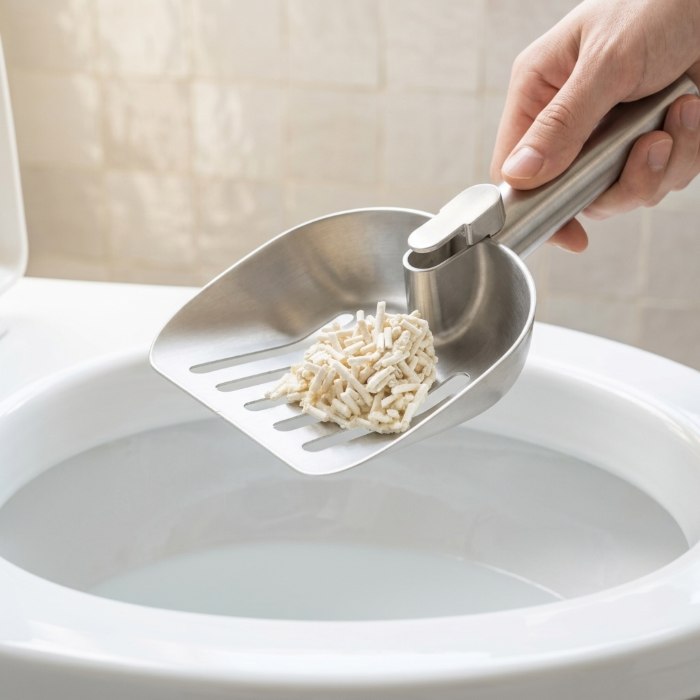
Drop in a single clump, flush, and let the cistern refill before the next one. It takes a few seconds longer than tipping the scoop, and it is the difference between a habit that works for years and a call-out.
ONE LOCAL CHECK
Some regions advise against putting cat waste into the sewer system at all, for reasons that have nothing to do with the litter. Have a quick look at your local guidance — and ask your vet if anyone in the house is pregnant or immunocompromised.
FLUSH THE CLUMP, NOT THE TRAY.
A full monthly change always goes in the bin — no plumbing enjoys a whole tray at once.
TWO CASES TO SKIP IT
Older or narrow plumbing, and macerating toilets — the kind fitted in basements, boats and some conversions — are not worth the risk. Shared buildings sometimes have their own rules about it too, so check before you start.
IF IN DOUBT, BIN IT
You lose nothing by choosing the bin.
- A binned clump is still plant fiber, so it breaks down rather than sitting in landfill.
- A 9 lb bag means far less bin weight than 35 lbs of clay.
- Never flush a whole tray change, however tempting.
- Never flush any litter that has been mixed with clay.
