
Why Do Cats Purr? What Your Cat Is Really Telling You
Furrly Cat Care › Behavior

Few sounds are as soothing as a cat curled in your lap, purring like a tiny motor. We tend to read it as pure happiness — and often it is. But purring is a richer language than that, and learning to read it tells you a lot about how your cat is really doing.
First, how do cats even purr?
Purring starts in the brain. A neural oscillator sends a steady signal to the muscles of the voice box, making them twitch roughly 25–150 times a second. As your cat breathes in and out, air passes those vibrating muscles and you get that continuous rumble — uniquely, on both the inhale and the exhale. Most small cats purr; the big roaring cats like lions and tigers generally don't.
The many reasons cats purr
1. Contentment
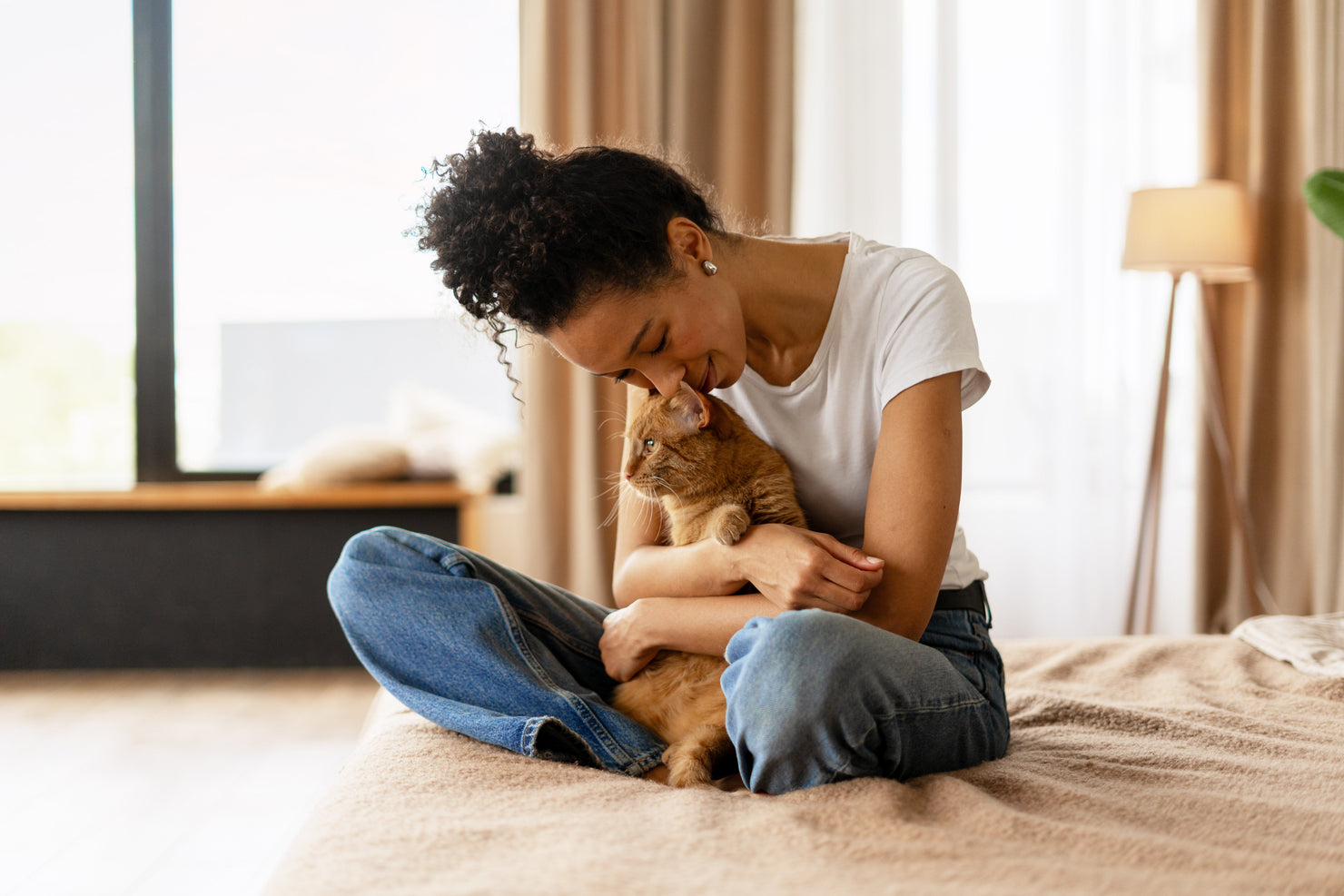
The classic one. A relaxed cat with half-closed eyes, a loose body, and slow blinks is telling you it feels safe. Kneading with the paws often comes along for the ride — a leftover comfort behavior from kittenhood.
2. Asking for something
Researchers have identified a “solicitation purr” — cats fold a higher, more urgent cry into the purr (acoustically close to a human baby's cry) when they want feeding or attention. It's almost impossible to tune out, which is rather the point.
3. Self-soothing
Here's the part that surprises people: cats also purr when they're stressed, frightened, in pain, giving birth, or even near the end of life. In those moments purring works like a child humming to themselves — a way to self-calm.
4. Maybe even healing
A leading theory is that the low frequencies of a purr (around 25–50 Hz) may help stimulate tissue and bone repair and ease pain. It's still being studied, but it could explain why cats purr when they're hurt as well as when they're happy.
How to tell a happy purr from a worried one
Don't read the purr alone — read the whole cat, plus the context.
- Happy: loose body, half-closed or slow-blinking eyes, upright or gently curved tail, kneading, leaning into your hand.
- Stressed or unwell: tense body, flattened or sideways ears, wide pupils, hiding, or purring while clearly not wanting to be touched.
Frequently asked questions
Do cats purr because they're happy or scared?
Both. Purring is most often contentment, but cats also purr to self-soothe when anxious or in pain. The surrounding body language tells you which.
Why does my cat purr and then bite me?
Usually overstimulation. Watch for a twitching tail, flattening ears, or skin rippling, and pause the petting before your cat feels the need to say “enough.”
Can cats control their purring?
It's largely automatic, but cats clearly aim it socially — they tend to purr more in our company, which suggests it's at least partly a way of communicating with us.
Keep exploring the Cat Care Library
Furrly is plant-based tofu litter that's kind to paws, noses, and the planet.
Try Furrly risk-freeUltra-low dust · Flushable · 30-night guarantee
Comments
No comments yet — be the first to share your experience.